Remote Warrior — UAS Basics
Understanding Drones (Unmanned Aircraft Systems)
A simple introduction to how drones work and where they are used.
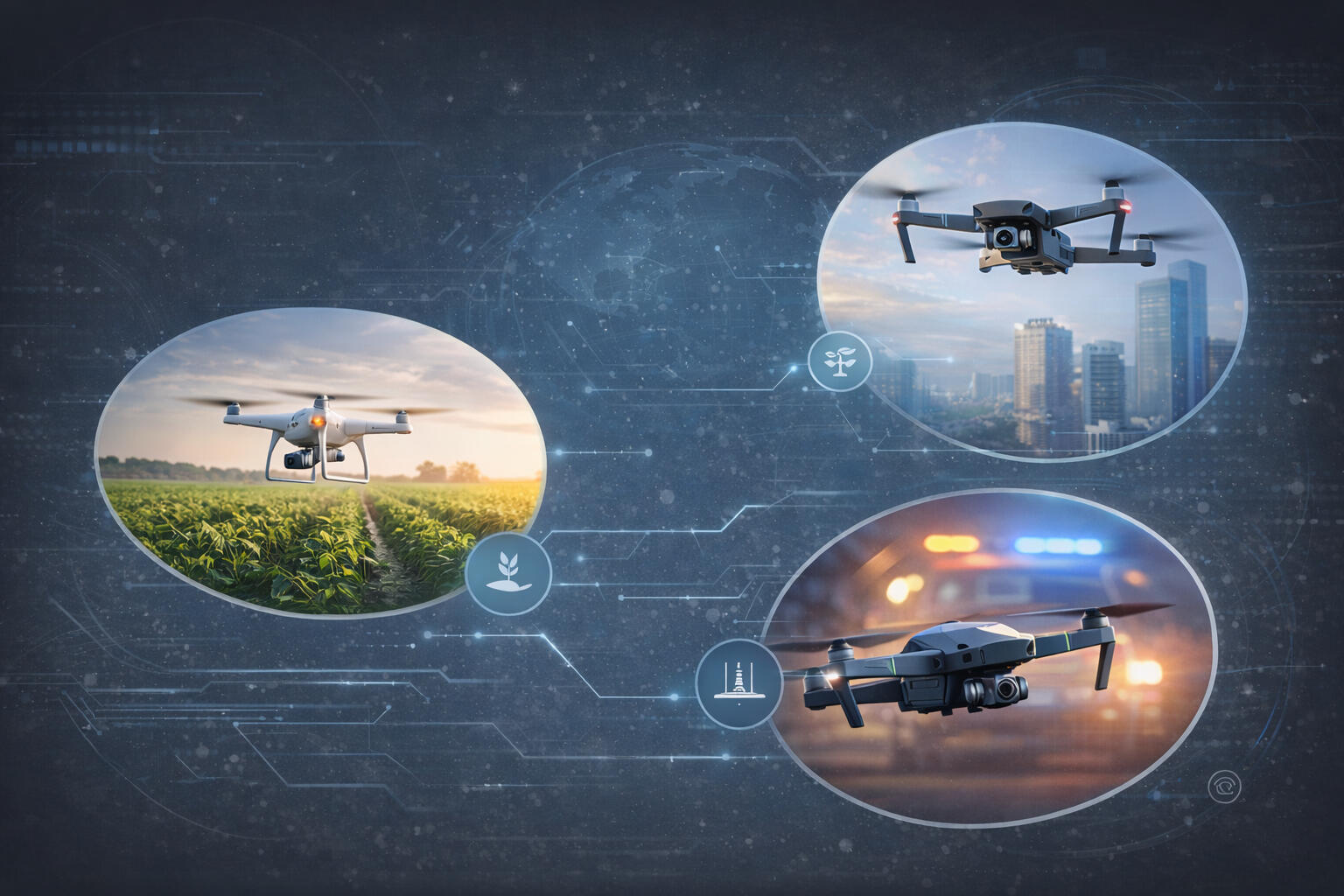
Unmanned aircraft systems (UAS) are one of the fastest-growing technology sectors in aviation. They are used across industries ranging from agriculture and infrastructure inspection to emergency response and environmental research. This page introduces the basic concepts behind how drones operate.
Section 1What Is a Drone?
A drone, also called an Unmanned Aircraft System (UAS)—is an aircraft that operates without a pilot onboard.
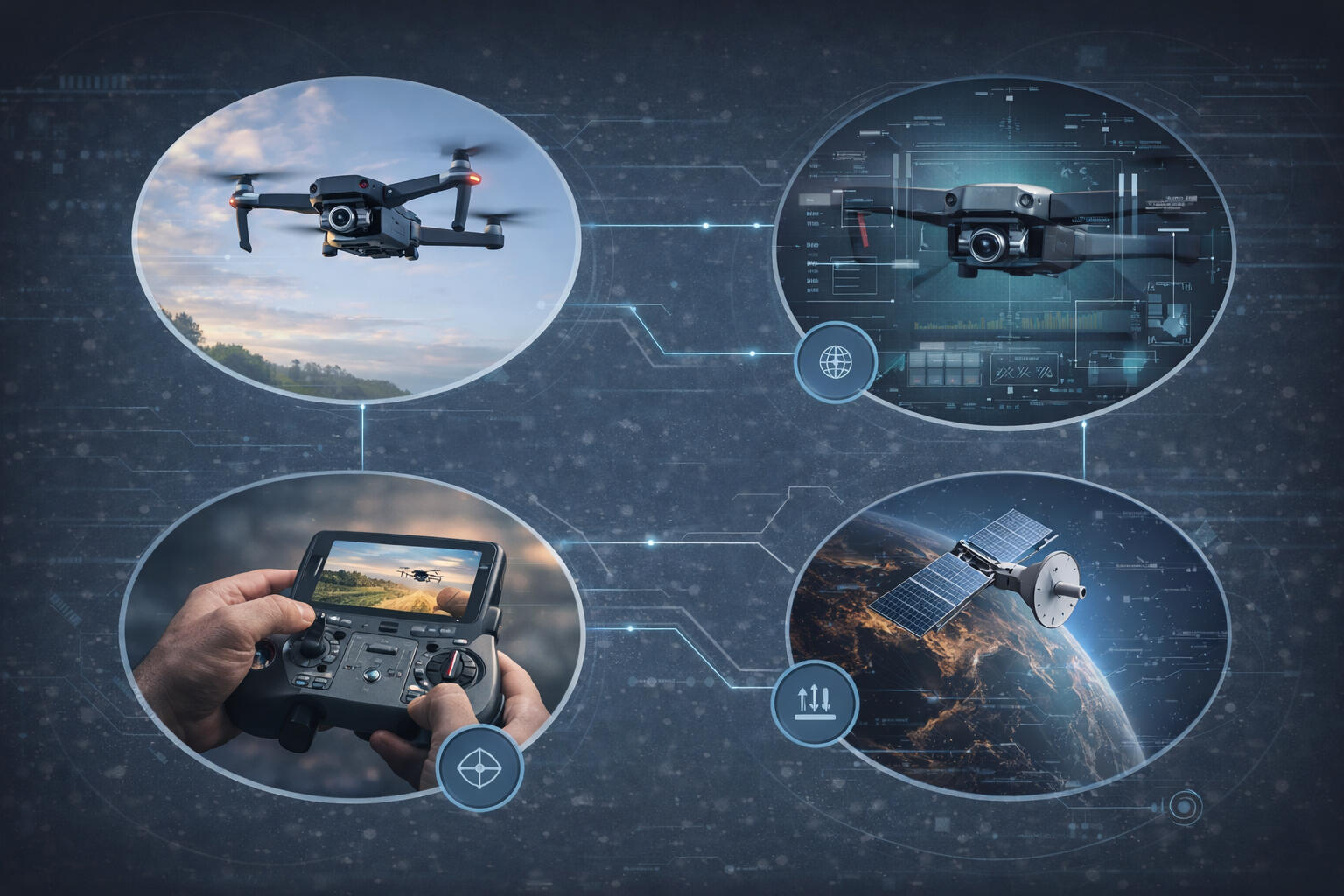
A full UAS system typically includes:
| Component | Description |
|---|---|
| Aircraft | The drone itself |
| Ground Control | The controller or computer used to operate it |
| Sensors | Cameras or instruments that collect data |
| Navigation Systems | GPS and onboard computers that guide flight |
Drones can be operated by a human pilot on the ground or fly partially autonomously using onboard software.
Section 2How Quadcopters Fly
One of the most common drone designs is the quadcopter.
Quadcopters use four rotors to generate lift and control movement.
Basic flight principles:
| Motion | How It Works |
|---|---|
| Lift | All rotors spin faster to rise |
| Descent | Rotors slow down |
| Forward / Back | Rear or front rotors change speed |
| Turn (Yaw) | Opposite rotors spin faster/slower |
Two rotors spin clockwise and two spin counterclockwise to stabilize the aircraft.
Section 3
Where Drones Are Used
Drones support many industries and public services.
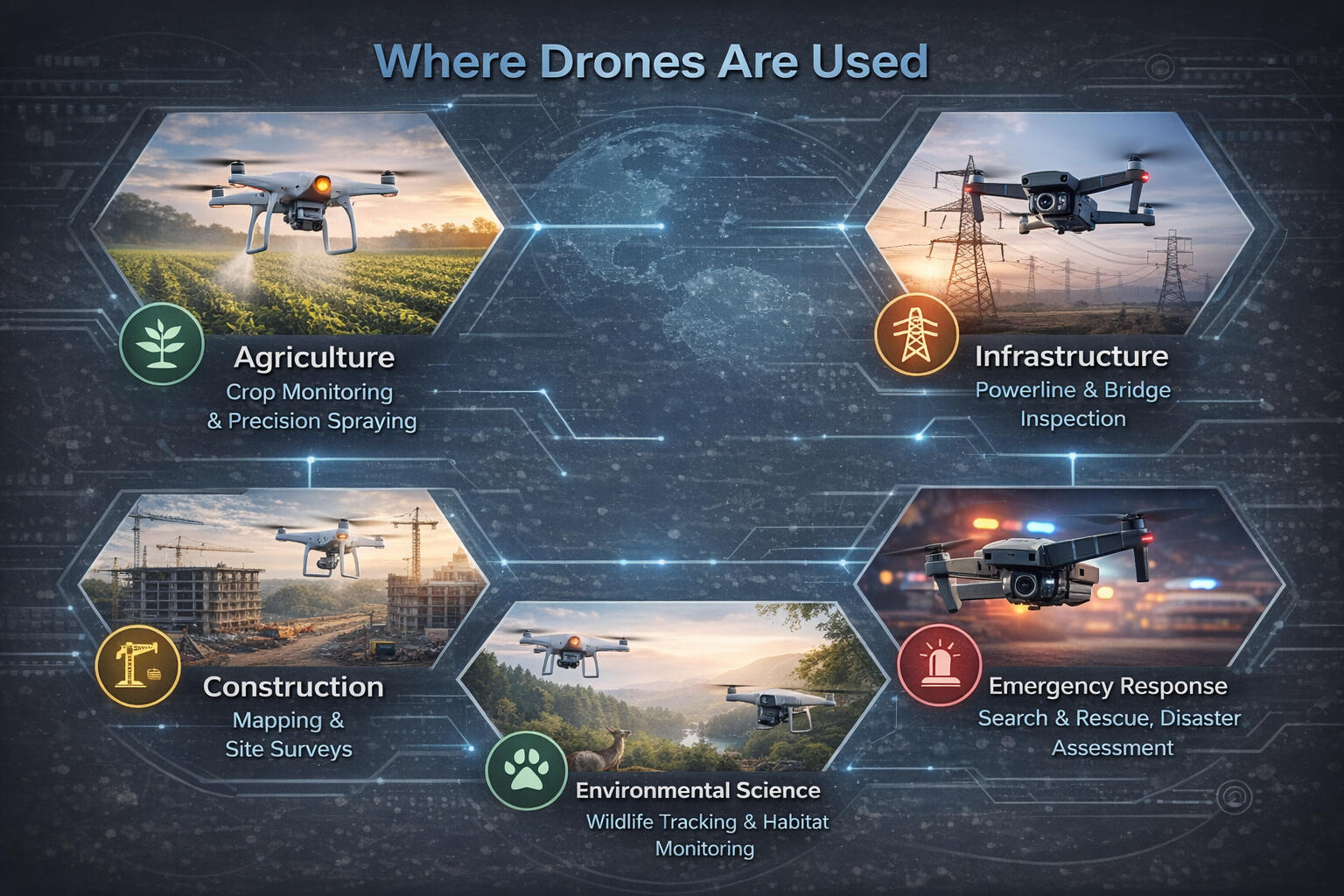
Common applications include:
| Industry | Example Uses |
|---|---|
| Agriculture | Crop monitoring, precision spraying |
| Infrastructure | Powerline and bridge inspection |
| Construction | Mapping and site surveys |
| Emergency Response | Search and rescue, disaster assessment |
| Environmental Science | Wildlife tracking and habitat monitoring |
| Film & Media | Aerial photography and cinematography |
Section 4
A Short History of Unmanned Aircraft
Aircraft (In order)
Queen Bee (1941)
RQ-1 (1990)
MQ-1 Predator (2006)
MQ-9 Reaper (2012)
| Industry | Example Uses |
|---|---|
| Early 1900s | Early radio-controlled aircraft experiments |
| 1980s–1990s | Military reconnaissance drone development |
| 2000s | Expanded use of remotely piloted aircraft |
| 2010s | Consumer quadcopters and commercial drone industry |
| Today | AI-assisted flight, autonomous systems, and advanced sensors |
Unmanned aviation continues to evolve rapidly as computing, sensors, and battery technology improve.
Section 5
Core Technology Inside Drones
Modern drones rely on several key technologies.
| Terminology | Function |
|---|---|
| GPS | Determines position and navigation |
| IMU Sensors | Measure orientation and movement |
| Flight Controller | Onboard computer stabilizing the aircraft |
| Cameras & Sensors | Capture imagery and environmental data |
| Batteries | Provide electrical power to motors and electronics |
These systems work together to maintain stable flight and collect useful data.
Section 6
Learning More About Drones
Students interested in drone technology can explore several entry paths:
Model aircraft clubs
Drone simulators
Robotics and engineering programs
STEM aviation education programs
For professional drone pilots in the United States, the FAA Part 107 Remote Pilot Certificate is required for commercial operations.
For professional military use extensive training programs and FAA License and Medical are usually required.
Remote Warrior is an independent initiative focused on the evolving unmanned aviation ecosystem and the translation of operational experience into practical insights for industry, research, and workforce development.
Contact:
[email protected]
All content and resources provided by Remote Warrior LLC are for informational and educational purposes only. Nothing on this site should be interpreted as legal, medical, or clinical advice, nor does it represent the official policy or position of the United States Department of Defense or U.S. Air Force. Use of any material is at your discretion and does not create a professional or therapeutic relationship. For questions related to health, safety, or legal matters, consult a qualified professional.
© Remote Warrior